

Research Peptides A Complete Guide
Lab-grade quality, COA verification, and GMP standards explained.
Not all peptides are created equal. The gap between a low-quality product and a properly manufactured research peptide is significant and it matters.This guide breaks down exactly what separates lab-grade research peptides from the rest, and what to look for before you buy.
What Are Research Peptides?
Research peptides are short chains of amino acids synthesised for use in controlled laboratory studies. They are not intended for human use; they exist to help scientists study biological processes at a molecular level.
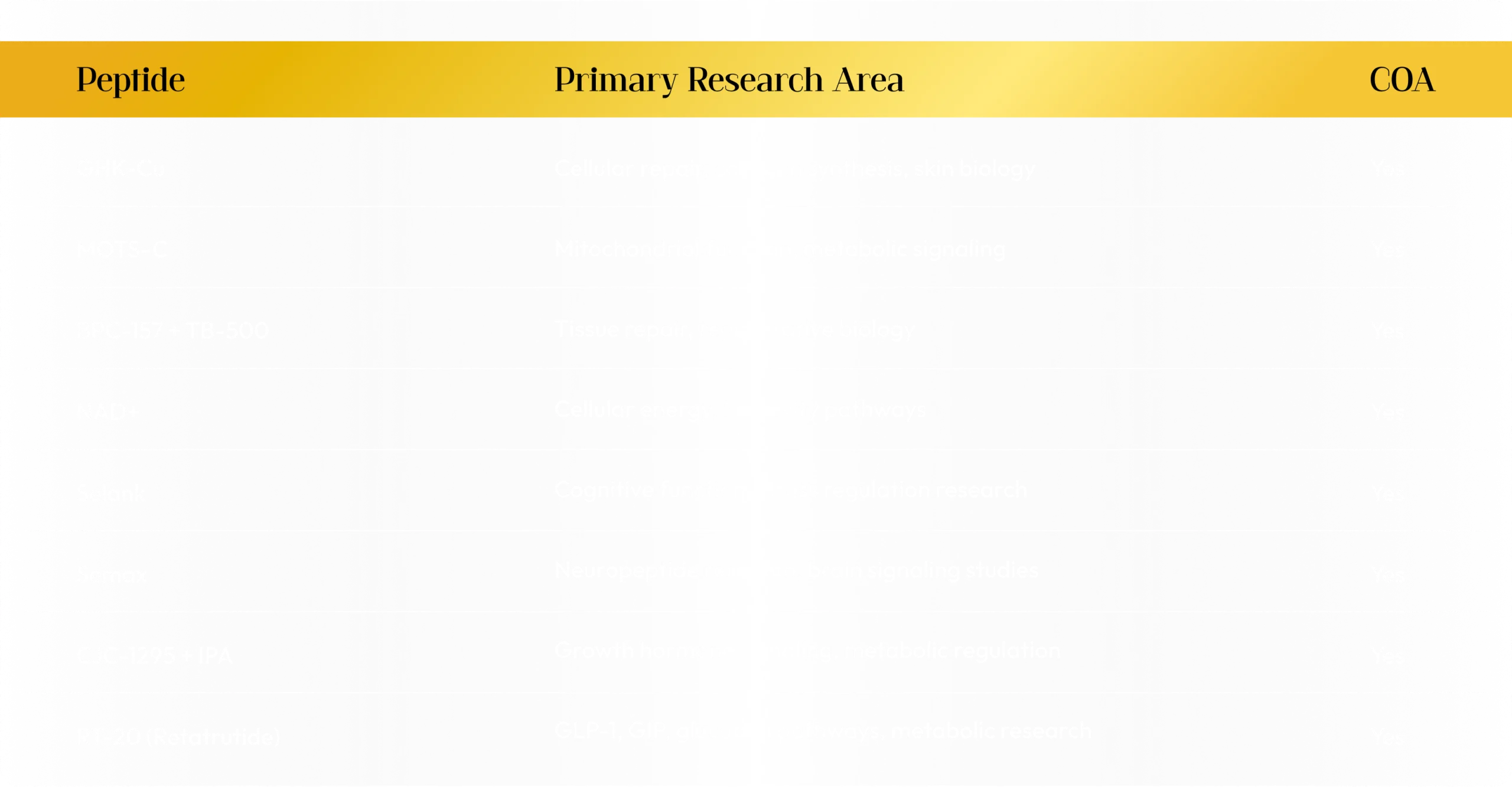
Commonly studied peptides include GHK-Cu, MOTS-C, BPC-157, NAD+, and Selank each researched for their specific interactions with biological systems.
Research Use Only What Does It Mean?
Products sold as research peptides are strictly for in vitro research and laboratory use. They are not approved by the FDA for human or veterinary administration.
Key Research Peptides and Their Study Areas
The following compounds represent some of the most actively studied research peptides in current scientific literature. Each has a distinct mechanism and a specific area of inquiry.
What Does Lab-Grade Quality Actually Mean?
Lab-grade is not a marketing term. It refers to a measurable standard of purity, identity, and consistency verified by independent testing.
Research Use Only What Does It Mean?
- Is it the correct compound?
- Is it free from contaminants and impurities?
- Consistency Does every batch match the specification?
Without verification of all three, a product cannot reliably be called lab-grade. This is where the Certificate of Analysis becomes essential.
COA Verification What It Is and Why It Matters
A Certificate of Analysis (COA) is a document issued by an independent, accredited laboratory confirming the test results for a specific product batch.
What a Valid COA Includes
- Name of the compound and batch number
- Purity percentage confirmed by HPLC or MS analysis
- Name and accreditation of the testing laboratory
- Date of testing and expiry of results
In-House vs. Third-Party Testing
In-house testing is conducted by the supplier itself which creates a conflict of interest. Third-party testing is conducted by an independent accredited laboratory with no commercial stake in the result.
For research purposes, only third-party COA results provide reliable, unbiased verification.
GMP Manufacturing The Production Standard
Good Manufacturing Practice (GMP) is an internationally recognised system of guidelines for the manufacture of pharmaceutical and research-grade compounds.
GMP covers facility standards, equipment calibration, staff training, raw material sourcing, and production documentation. A GMP-compliant supplier can trace every step of production for every batch.
Why GMP Matters for Research Peptides
- Ensures raw materials meet defined specifications before use
- Prevents cross-contamination between batches and compounds
- Guarantees consistent purity levels across every production run
- Provides full traceability from raw material to finished vial
How TPOP - The Prince of Peptides Meets Every Standard
At TPOP – The Prince of Peptides, every product is manufactured under strict GMP conditions and independently tested by accredited third-party laboratories.
Full COA documentation is available for every product. We do not conduct in-house testing results that come from independent facilities so you can trust the data directly.
Our Quality Commitments at a Glance
- COA-verified peptides every batch, every product
- Independent third-party testing no in-house results
- GMP-certified manufacturing facilities
- Fast USA shipping orders dispatched within 24 hours
- Research-only full compliance with research-grade protocols
Ready to Buy Research Peptides Online?
Explore TPOP – The Prince of Peptides full range of COA-verified, lab-grade research peptides.